Van Every Family Chiropractic Center
What Is the Perfect Storm?
A parent guide to the early stress patterns that can disrupt a child's nervous system, and how gentle neurologically focused chiropractic care can help families look deeper.
The Perfect Storm framework
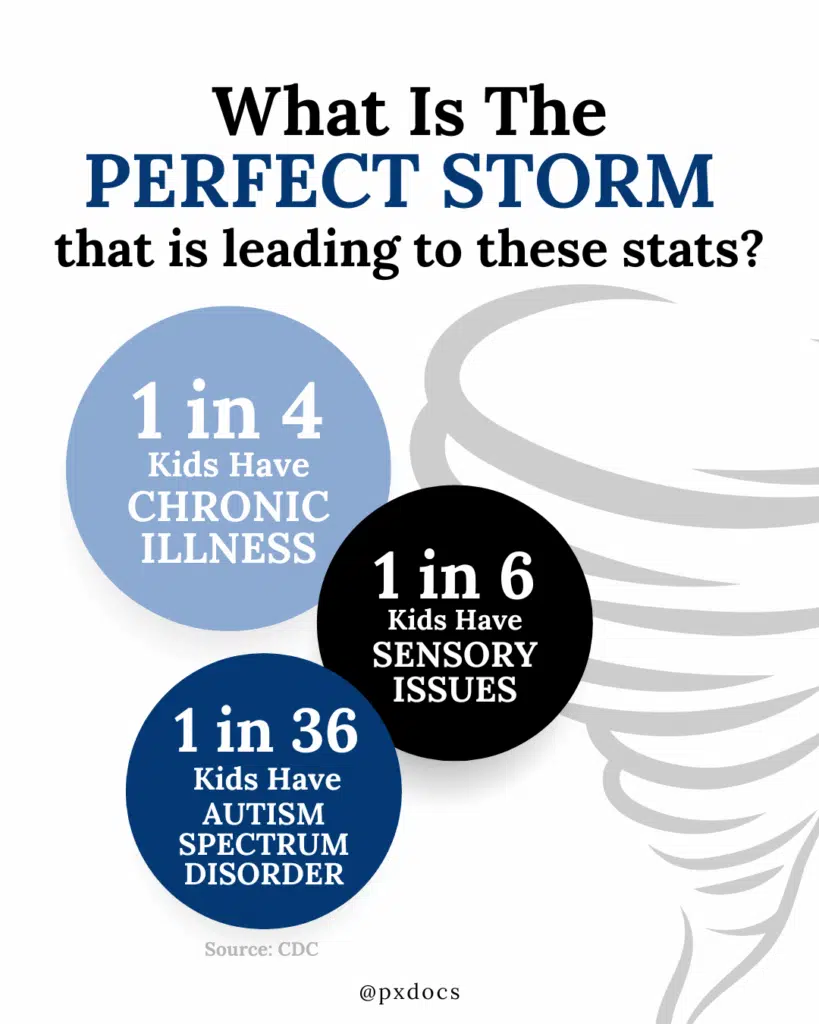
The Perfect Storm describes a convergence of stressors that can push a child's nervous system into an overworked, dysregulated state. The goal is not to blame parents or reduce everything to genetics. The goal is to understand the pattern and know where to get support.
of children in the United States are estimated to have special healthcare needs.
of school-aged children have a chronic condition.
patients with ASD in one autonomic dysfunction study reported significant gastrointestinal symptoms.
Fertility challenges
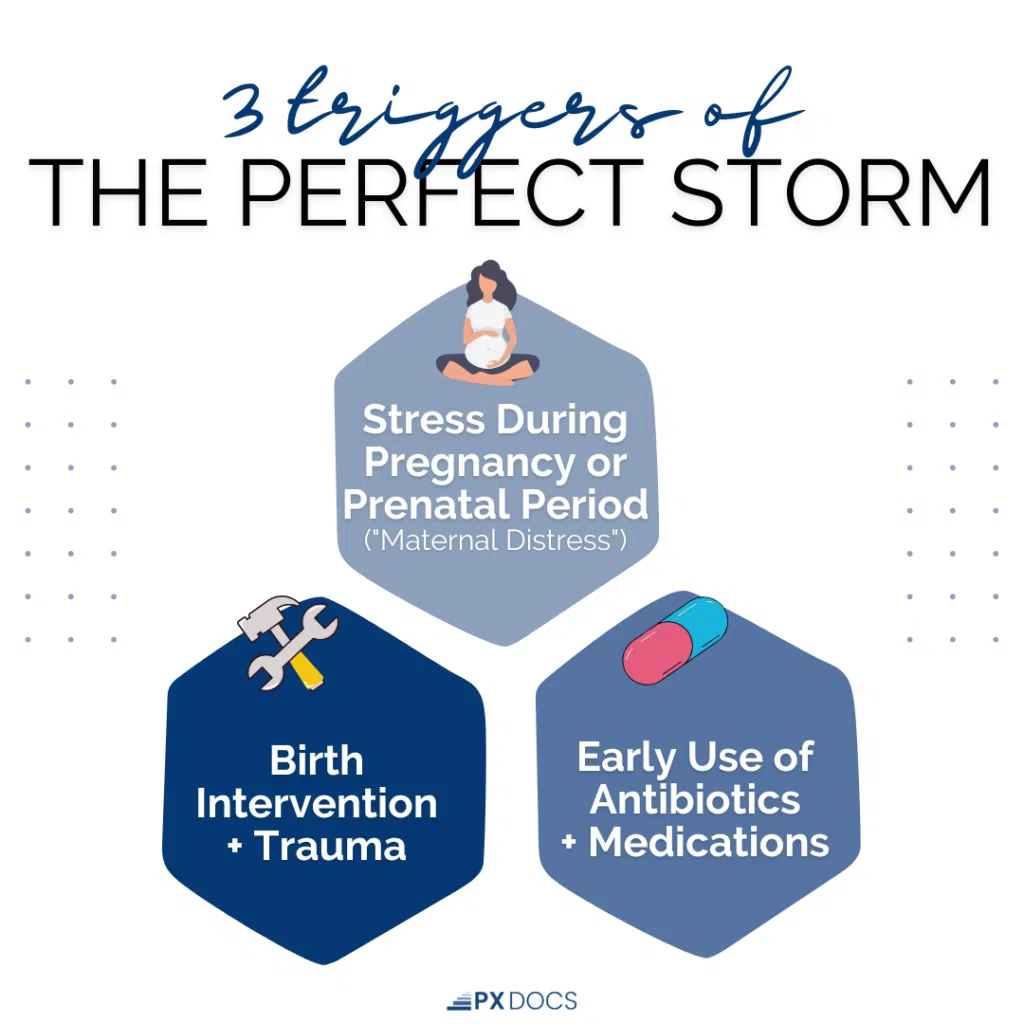
Stress and interventions during the fertility journey can influence early nervous system development.
Prenatal stress
High stress during pregnancy can affect fetal nervous system development and regulation.
Birth interventions
C-sections, forceps, vacuum extraction, and birth trauma can strain the head, neck, brainstem, and spine.
Toxic load
Environmental toxins and frequent medication exposure can add pressure to immune and gut function.
Nervous system stress
Each layer can build into dysautonomia, vagus nerve dysfunction, and poor brain to body communication.
The neurological connection
The autonomic nervous system regulates involuntary functions like digestion, immune response, heart rate, sleep, and emotional regulation. When a child's system gets stuck in a high stress state, symptoms can show up across many body systems.
From a neurologically focused chiropractic viewpoint, subluxation is not just a structural issue. It is a disruption in the body's ability to communicate, adapt, and heal naturally.
The vagus nerve is especially important because it helps regulate rest, digestion, inflammation, immune response, mood, and sleep. Supporting vagus nerve function and calming sympathetic stress are central to the Van Every approach.
How the storm can show up
Nervous system dysfunction can look different from child to child. Families often notice patterns across digestion, sleep, immune function, mood, sensory processing, and development.
- Colic
- Constipation
- Chronic ear infections
- Missed milestones
- Developmental delays
- Autism spectrum concerns
- ADHD
- Sensory processing challenges
- Anxiety
- Sleep difficulty
- Digestive issues
- Immune stress
The Van Every approach
At Van Every Family Chiropractic Center, our doctors use gentle, neurologically focused pediatric care to assess nervous system function and support better regulation.
Objective neurological assessment
INSiGHT scans help evaluate nervous system function without pain, needles, or radiation.
Personalized care plans
Care is based on your child's history, scans, goals, and current stress patterns.
Gentle adjustments
Van Every uses low force, nervous-system-focused techniques including TTC, KST, and the Arthrostim instrument. No cracking, popping, or twisting is required.
Start with a nervous system visit
If you suspect your child may be struggling with the impact of the Perfect Storm, seeking support early can help your family understand what is going on and what to do next.
Our team will help your family get scheduled and answer any questions.